
アークスグループ各社のホームページ一覧です。
選択した会社のホームページへ移動します。



Food supermarkets, the ARCS Group’s main business, are deeply tied to the global environment. Our merchandise relies on natural capital such as agricultural and marine products, and our business activities generate significant environmental impacts including CO2 emissions from procurement, logistics, processing, and store operations, along with food loss and plastic waste. Climate change-related disasters also pose direct risks to supermarkets as location-based businesses. Reducing our environmental footprint and ensuring the sustainability of natural capital are essential to our long-term viability.
The ARCS Group focuses on conserving resources and energy to reduce our environmental footprint. Resource conservation efforts include composting food waste, running food drives, collecting used trays and PET bottles at our stores, and charging for plastic bags with proceeds donated to tree planting. Energy initiatives include switching to LED lighting, upgrading refrigeration systems for efficiency, and expanding the use of renewable energy. Through these efforts in environmental conservation and resource efficiency, we contribute to a sustainable future.
Under its group philosophy—“contributing to affluent lifestyles by providing valuable merchandise and services at low prices as a lifeline for each community”—the ARCS Group aims to realize a sustainable society and strives to reduce environmental impact through the following initiatives:
1. Decarbonization of Energy
2. Waste Reduction and Recycling
3. Environmentally Conscious Procurement
4. Compliance and Adherence to Laws and Regulations
5. Communication and Collaboration Inside and Outside the Company
We continue recycling through in-store collection of food trays, milk cartons, waste cooking oil, and other items. In particular, food trays undergo horizontal recycling, with collected trays processed into new trays. This customer-participatory system makes our stores key hubs for supporting resource circulation.
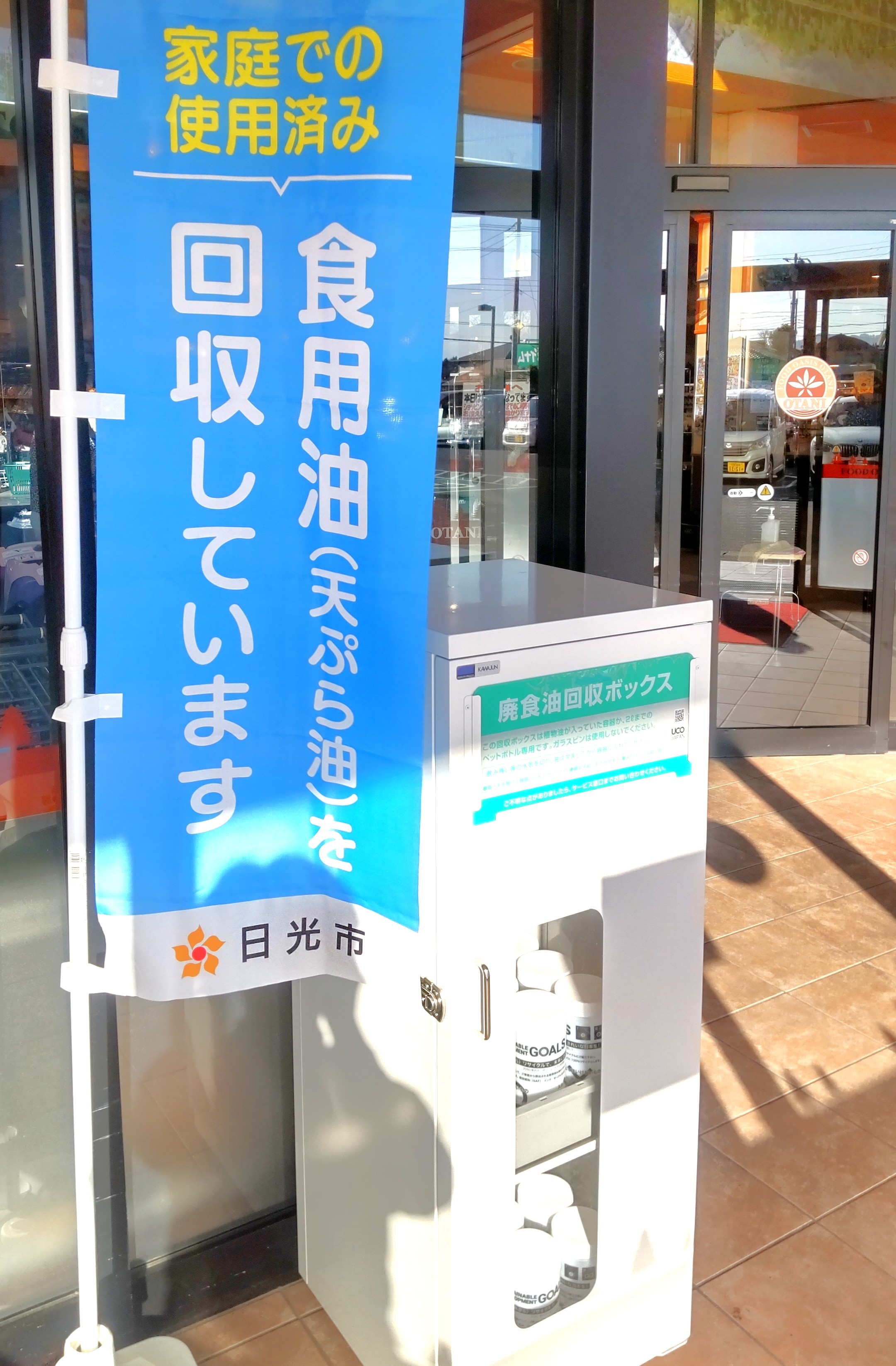
Food Oasis OTANI Osawa Store (OTANI) waste oil collection box
We hold food drives throughout our regions, encouraging households to donate surplus food to local welfare organizations, thereby reducing food loss while supporting communities. At the store level, we cut waste by reviewing delivery rules, such as adjusting deadlines and order volumes. Together with local communities, we are advancing the creation of sustainable food cycles.
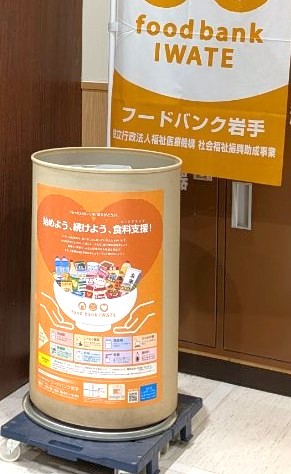
Super ARCS Yahaba Store (BELJOIS) food bank post
The ARCS Group considers climate change as a critical issue to be addressed throughout the Group and recognizes that the risks and opportunities it presents
have a significant impact on our business strategy. We have endorsed the recommendations of the Task Force on Climate-Related Financial Disclosures (TCFD).

The Sustainability Promotion Committee is chaired by ARCS’s President, COO, and its Secretary General is the General Manager of the Sustainability Promotion Office. The committee oversees sustainability initiatives, including climate change response efforts. The committee also works closely with the Compliance and Risk Management Committee to assess risks and discuss countermeasures, and reports to the Board of Directors as necessary.
First, we envisioned a world in 2050 under two scenarios: “1.5°C” and “4°C” for the global average temperature increase compared to pre-industrial times by the end of this century. Next, we analyzed ARCS’s opportunities and risks in 2030 in terms of the potential impact on our business. Then, we identified specific initiatives to address the most significant opportunities and risks, and are actively implementing them throughout the Group.
| Highly Significant Risks & Opportunities | Initiatives |
|---|---|---|
Risks | Carbon tax burden incurred | ・Install/update energy-efficient air conditioning, refrigeration, and freezing equipment, etc. ・ Improve the efficiency of logistics operations through consolidation of distribution centers or modal shift |
Increase in renewable energy investment costs | ・Expand the installation of photovoltaic power generation equipment | |
Opportunities | Reduction of food disposal costs | ・ Improve the accuracy of merchandise purchase orders, processing and manufacturing plans, inventory control, etc. ・Recycle food residues. |
In line with our Sustainability Promotion Policy, which aims to realize a sustainable society and the Group’s growth, the ARCS Group has set KPIs for CO2 emissions related to climate change, closely connected to our supermarket operations, and monitors them regularly. The most recent available emission performance and long-term targets are as follows:
| FY2013 actual* | FY2022 actual | FY2023 actual | |
|---|---|---|---|
| Scope 1 and Scope 2 | 343,790t-CO2e | 312,761t-CO2e | 310,142t-CO2e |
| Unit class | FY2013 actual* | FY2022 actual | FY2023 actual | FY2013 vs. |
|---|---|---|---|---|
| Per net sales (100 million yen) | 78.78t-CO2e | 55.71t-CO2e | 52.83t-CO2e | (32.9)% |
* FY2013 results include some estimates.
| FY2030 | FY2050 |
|---|---|
| CO2 emissions per 100 million yen in sales (Scopes 1 and 2) 50% reduction compared to FY2013 |
Achieve carbon neutrality |

The Group received a B score,
the third level in the eightlevel system after A and A-.